



Does purified water equipment have redundant pumps or backup circuits to prevent downtime?
Release Time : 2025-12-09
In production environments highly sensitive to water quality, such as beverage, pharmaceutical, and medical device manufacturing, purified water is not only a raw material or cleaning medium, but also a lifeline ensuring product safety and compliance. An interruption in water supply can lead to production line shutdowns and batch spoilage, or even affect the sterile environment and trigger regulatory risks. Therefore, whether purified water equipment is equipped with redundant pumps or backup circuits to prevent downtime has become a key indicator of its reliability and industrial maturity.
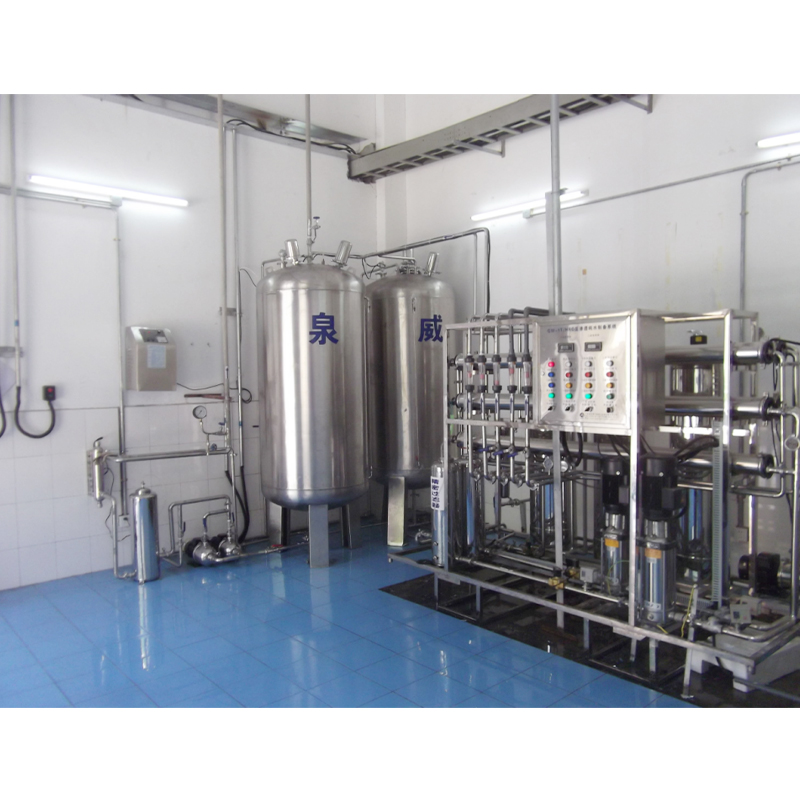
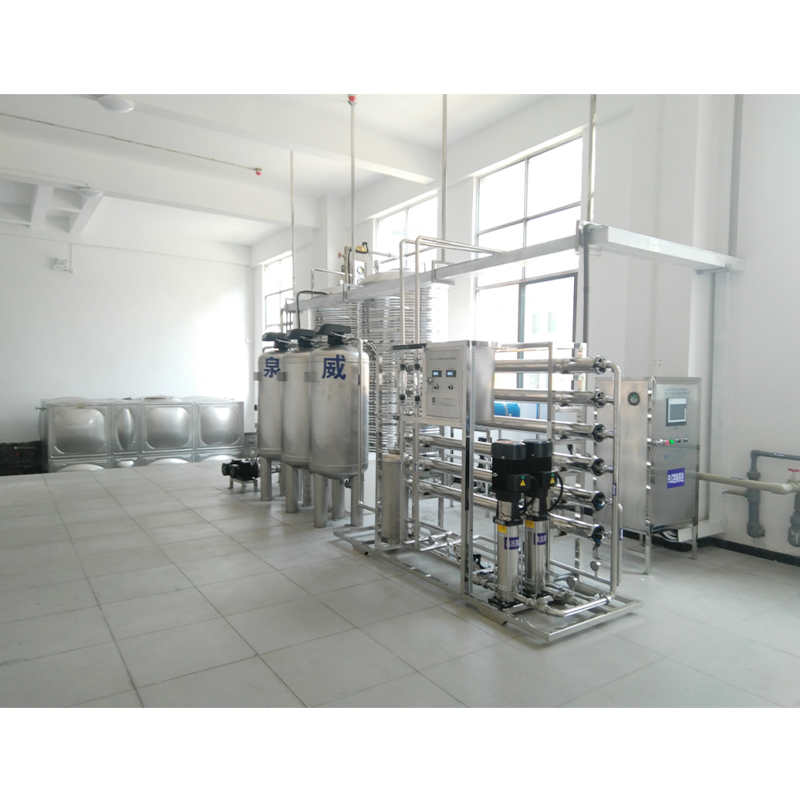
"Redundancy design" is not simply adding a backup pump, but rather a systematic architectural arrangement that ensures that in the event of a failure, maintenance, or performance degradation of the primary unit, the backup unit can seamlessly take over and maintain continuous water supply. In high-end purified water systems, this redundancy is typically reflected at two levels: critical power components and core process circuits. For example, the high-pressure pump, as the "heart" of the reverse osmosis (RO) or electro-deionization (EDI) module, will immediately paralyze the entire system if it experiences a sudden mechanical failure or motor overheating and shutdown. Equipped with a dual-pump configuration (one in operation and one on standby), and through automatic switching logic control, the standby pump can be activated within milliseconds to avoid water production interruptions. More advanced systems even employ a multi-pump parallel design, intelligently starting and stopping based on water load, improving both energy efficiency and fault tolerance.
Besides the pumps, redundancy in the distribution loop is equally important. In the purified water circulation networks commonly found in pharmaceutical plants, if a main pipeline valve fails or a section of the pipeline needs to be isolated for maintenance, the lack of a bypass or backup loop will cause the entire loop to shut down. Systems with redundancy designs will incorporate bypass valve groups, dual-loop parallel or zoned independent water supply structures, ensuring that local maintenance does not affect overall operation. Furthermore, the control system itself often employs dual power supplies, dual PLCs, or UPS uninterruptible power supplies to prevent cascading shutdowns caused by electrical faults.
However, redundancy is not about blindly piling on hardware. True engineering wisdom lies in striking a balance between "necessary and reliable." Excessive redundancy increases cost, complexity, and potential failure points; while insufficient redundancy cannot cope with real-world operating conditions. Therefore, specialized equipment manufacturers typically customize redundancy levels based on user risk assessments (such as FMEA analysis), production continuity requirements, and regulatory guidelines (such as GMP appendices). For example, water for injection systems often mandate redundancy for critical pump units, while general cleaning water systems can be simplified to a lesser extent.
It is important to note that the effectiveness of redundancy depends on regular verification and maintenance. If a standby pump is left idle for extended periods, bearings may corrode and seals may age, potentially leading to failure at critical moments. Therefore, advanced systems incorporate "rotational operation" or "periodic self-check" procedures to ensure that standby units are always ready. Simultaneously, operators must receive specialized training and be familiar with switchover procedures to prevent human error from negating the value of redundancy.
Finally, from a management perspective, redundancy design also reflects a company's emphasis on business continuity and a quality culture. It conveys not only technical assurance but also a "zero-tolerance for interruptions" production philosophy—behind every drop of pure water flowing to the filling line or cleaning station, another silent system is always ready to take over the mission.
In conclusion, whether purified water equipment is equipped with redundant pumps or backup circuits is far more than just a hardware configuration issue; it is a comprehensive reflection of production safety, regulatory compliance, and operational resilience. While pursuing ultimate cleanliness, it is essential to build a reliable "second line of defense" to safeguard the uninterrupted flow of pure water in the ever-changing industrial environment.
"Redundancy design" is not simply adding a backup pump, but rather a systematic architectural arrangement that ensures that in the event of a failure, maintenance, or performance degradation of the primary unit, the backup unit can seamlessly take over and maintain continuous water supply. In high-end purified water systems, this redundancy is typically reflected at two levels: critical power components and core process circuits. For example, the high-pressure pump, as the "heart" of the reverse osmosis (RO) or electro-deionization (EDI) module, will immediately paralyze the entire system if it experiences a sudden mechanical failure or motor overheating and shutdown. Equipped with a dual-pump configuration (one in operation and one on standby), and through automatic switching logic control, the standby pump can be activated within milliseconds to avoid water production interruptions. More advanced systems even employ a multi-pump parallel design, intelligently starting and stopping based on water load, improving both energy efficiency and fault tolerance.
Besides the pumps, redundancy in the distribution loop is equally important. In the purified water circulation networks commonly found in pharmaceutical plants, if a main pipeline valve fails or a section of the pipeline needs to be isolated for maintenance, the lack of a bypass or backup loop will cause the entire loop to shut down. Systems with redundancy designs will incorporate bypass valve groups, dual-loop parallel or zoned independent water supply structures, ensuring that local maintenance does not affect overall operation. Furthermore, the control system itself often employs dual power supplies, dual PLCs, or UPS uninterruptible power supplies to prevent cascading shutdowns caused by electrical faults.
However, redundancy is not about blindly piling on hardware. True engineering wisdom lies in striking a balance between "necessary and reliable." Excessive redundancy increases cost, complexity, and potential failure points; while insufficient redundancy cannot cope with real-world operating conditions. Therefore, specialized equipment manufacturers typically customize redundancy levels based on user risk assessments (such as FMEA analysis), production continuity requirements, and regulatory guidelines (such as GMP appendices). For example, water for injection systems often mandate redundancy for critical pump units, while general cleaning water systems can be simplified to a lesser extent.
It is important to note that the effectiveness of redundancy depends on regular verification and maintenance. If a standby pump is left idle for extended periods, bearings may corrode and seals may age, potentially leading to failure at critical moments. Therefore, advanced systems incorporate "rotational operation" or "periodic self-check" procedures to ensure that standby units are always ready. Simultaneously, operators must receive specialized training and be familiar with switchover procedures to prevent human error from negating the value of redundancy.
Finally, from a management perspective, redundancy design also reflects a company's emphasis on business continuity and a quality culture. It conveys not only technical assurance but also a "zero-tolerance for interruptions" production philosophy—behind every drop of pure water flowing to the filling line or cleaning station, another silent system is always ready to take over the mission.
In conclusion, whether purified water equipment is equipped with redundant pumps or backup circuits is far more than just a hardware configuration issue; it is a comprehensive reflection of production safety, regulatory compliance, and operational resilience. While pursuing ultimate cleanliness, it is essential to build a reliable "second line of defense" to safeguard the uninterrupted flow of pure water in the ever-changing industrial environment.