


Can purified water preparation devices, powered by technology, transform brackish seawater into a vital source of life for buildings and factories?
Release Time : 2026-03-03
In coastal cities, island communities, or industrial zones, the scarcity of freshwater resources often becomes an invisible bottleneck to daily life and production development. When traditional water supply systems struggle to meet the ever-increasing demand for clean water, seawater desalination-type purified water preparation devices emerge from the background—they do not rely on external pipe networks but instead use reverse osmosis, pretreatment, and intelligent control as their core to transform inexhaustible seawater into clean freshwater that meets living standards, providing a stable, safe, and sustainable daily water supply for building residents, factory employees, and even the entire community. Quietly and silently, it builds an invisible bridge of life between brackish and fresh water through a continuously operating membrane system.
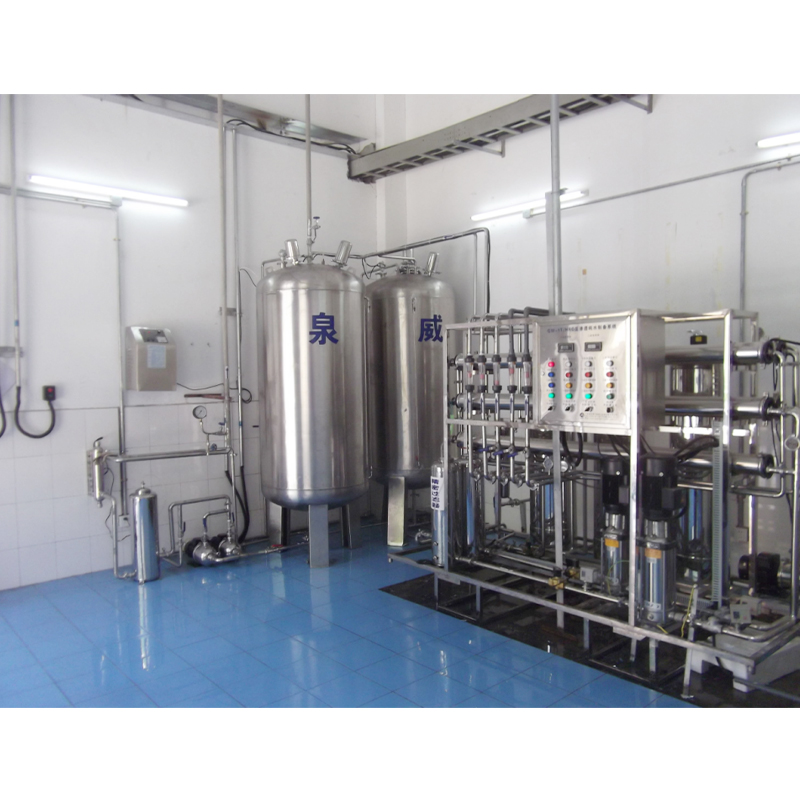
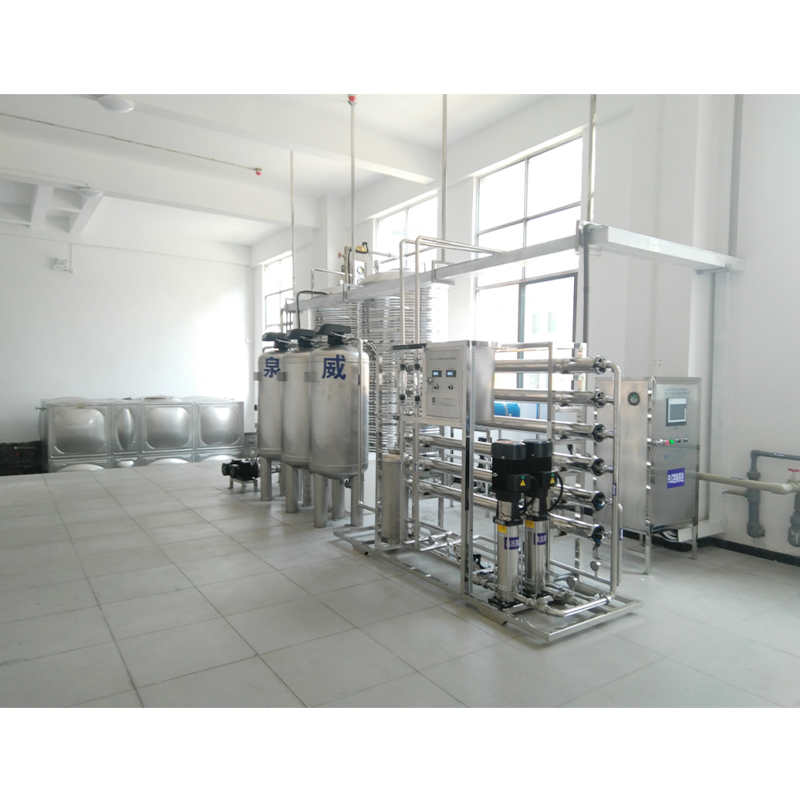
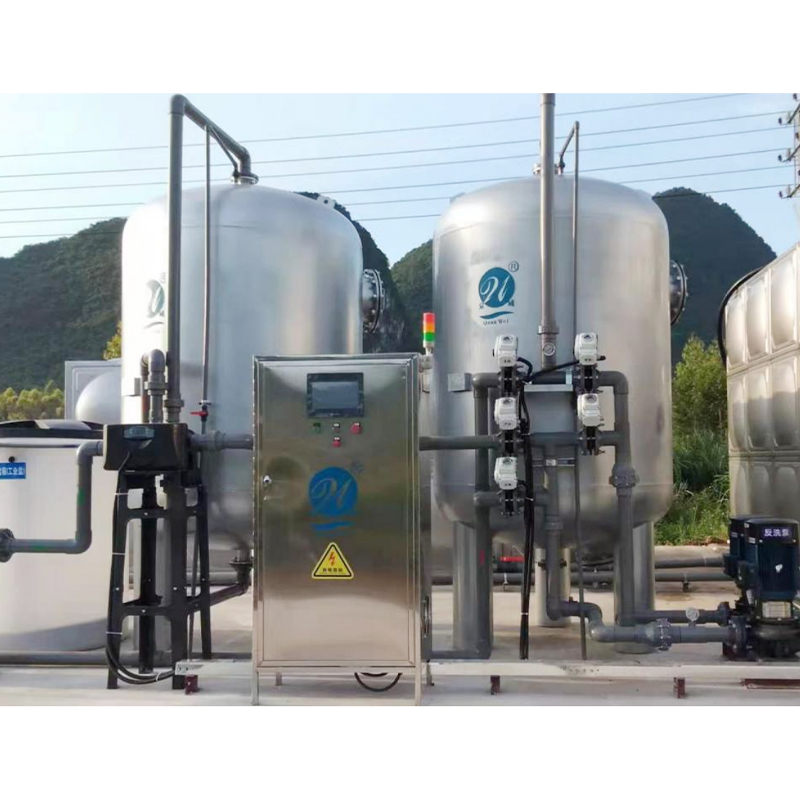
Its core value is primarily reflected in its highly efficient purification capabilities for complex raw water. Seawater not only has a high salt content but also contains silt, algae, organic matter, and microorganisms. The device removes suspended solids and residual chlorine through multi-stage pretreatment (such as multi-media filtration, activated carbon adsorption, and precision security filtration) to protect the core reverse osmosis membrane. A high-pressure pump drives seawater through a semi-permeable membrane, retaining over 99% of dissolved salts, heavy metals, and bacteria/viruses. Post-mineralization or pH adjustment units improve taste and pipeline compatibility. The final output water is clear, odorless, and fully meets the "Standards for Drinking Water Quality," suitable for direct use in drinking, cooking, bathing, and industrial auxiliary water applications.
In terms of application scenarios, the modular design adapts to the diverse needs of buildings and factories. Small units can be embedded in residential building equipment rooms to provide daily water for dozens of households; medium and large systems are deployed in industrial parks to support processes such as cooling, cleaning, and boiler feed. The equipment operates fully automatically, featuring water shortage protection, high-pressure alarms, and automatic flushing, significantly reducing manual intervention. Energy optimization technologies, such as energy recovery devices, significantly reduce electricity consumption per ton of water, making long-term operation more economical. Especially in areas with unstable municipal water supply or poor water quality, this device becomes a key infrastructure for improving quality of life and production continuity.
A deeper significance lies in its dual contribution to resource sustainability and emergency preparedness. Faced with frequent droughts caused by climate change, seawater desalination provides a water source unaffected by rainfall. In the event of water supply disruptions due to typhoons, earthquakes, or other disasters, the device can be quickly activated, becoming an emergency lifeline. Simultaneously, concentrated brine is diluted by diffusers, reducing localized impacts on marine ecosystems; some systems are also exploring coupling with photovoltaic and wind power, moving towards zero-carbon water production. This is not merely a technological solution, but a strategic choice for future water resources.
Furthermore, intelligent operation and maintenance are enhancing its reliability and transparency. Remote monitoring platforms display real-time water production, desalination rate, pressure parameters, and filter life; mobile apps push maintenance reminders; and cloud data storage facilitates water quality traceability and management decisions. Users are no longer "unable to see or touch" the source of every drop of water, but are fully aware of its origin and quality.
Ultimately, the significance of a purified water preparation device lies not in the number of tons of seawater it processes, but in how it ensures safe and reliable water flows even in saline environments. When crisp, clear water flows from the kitchen in the early morning, when factory production lines run non-stop thanks to a stable water supply—behind this is a set of silent equipment, working in harmony with membranes and pumps to transform the vast ocean into tangible daily benefits. Because in an era where water resources are increasingly precious, true security lies not in waiting for rain, but in mastering the ability to turn bitter water into sweet spring water—silent as a machine, yet possessing its own clear flow.
Its core value is primarily reflected in its highly efficient purification capabilities for complex raw water. Seawater not only has a high salt content but also contains silt, algae, organic matter, and microorganisms. The device removes suspended solids and residual chlorine through multi-stage pretreatment (such as multi-media filtration, activated carbon adsorption, and precision security filtration) to protect the core reverse osmosis membrane. A high-pressure pump drives seawater through a semi-permeable membrane, retaining over 99% of dissolved salts, heavy metals, and bacteria/viruses. Post-mineralization or pH adjustment units improve taste and pipeline compatibility. The final output water is clear, odorless, and fully meets the "Standards for Drinking Water Quality," suitable for direct use in drinking, cooking, bathing, and industrial auxiliary water applications.
In terms of application scenarios, the modular design adapts to the diverse needs of buildings and factories. Small units can be embedded in residential building equipment rooms to provide daily water for dozens of households; medium and large systems are deployed in industrial parks to support processes such as cooling, cleaning, and boiler feed. The equipment operates fully automatically, featuring water shortage protection, high-pressure alarms, and automatic flushing, significantly reducing manual intervention. Energy optimization technologies, such as energy recovery devices, significantly reduce electricity consumption per ton of water, making long-term operation more economical. Especially in areas with unstable municipal water supply or poor water quality, this device becomes a key infrastructure for improving quality of life and production continuity.
A deeper significance lies in its dual contribution to resource sustainability and emergency preparedness. Faced with frequent droughts caused by climate change, seawater desalination provides a water source unaffected by rainfall. In the event of water supply disruptions due to typhoons, earthquakes, or other disasters, the device can be quickly activated, becoming an emergency lifeline. Simultaneously, concentrated brine is diluted by diffusers, reducing localized impacts on marine ecosystems; some systems are also exploring coupling with photovoltaic and wind power, moving towards zero-carbon water production. This is not merely a technological solution, but a strategic choice for future water resources.
Furthermore, intelligent operation and maintenance are enhancing its reliability and transparency. Remote monitoring platforms display real-time water production, desalination rate, pressure parameters, and filter life; mobile apps push maintenance reminders; and cloud data storage facilitates water quality traceability and management decisions. Users are no longer "unable to see or touch" the source of every drop of water, but are fully aware of its origin and quality.
Ultimately, the significance of a purified water preparation device lies not in the number of tons of seawater it processes, but in how it ensures safe and reliable water flows even in saline environments. When crisp, clear water flows from the kitchen in the early morning, when factory production lines run non-stop thanks to a stable water supply—behind this is a set of silent equipment, working in harmony with membranes and pumps to transform the vast ocean into tangible daily benefits. Because in an era where water resources are increasingly precious, true security lies not in waiting for rain, but in mastering the ability to turn bitter water into sweet spring water—silent as a machine, yet possessing its own clear flow.