


How does a commercial water dispenser achieve precise temperature control through an independent heating module and heat exchange for its multi-temperature dispensing function?
Release Time : 2026-03-16
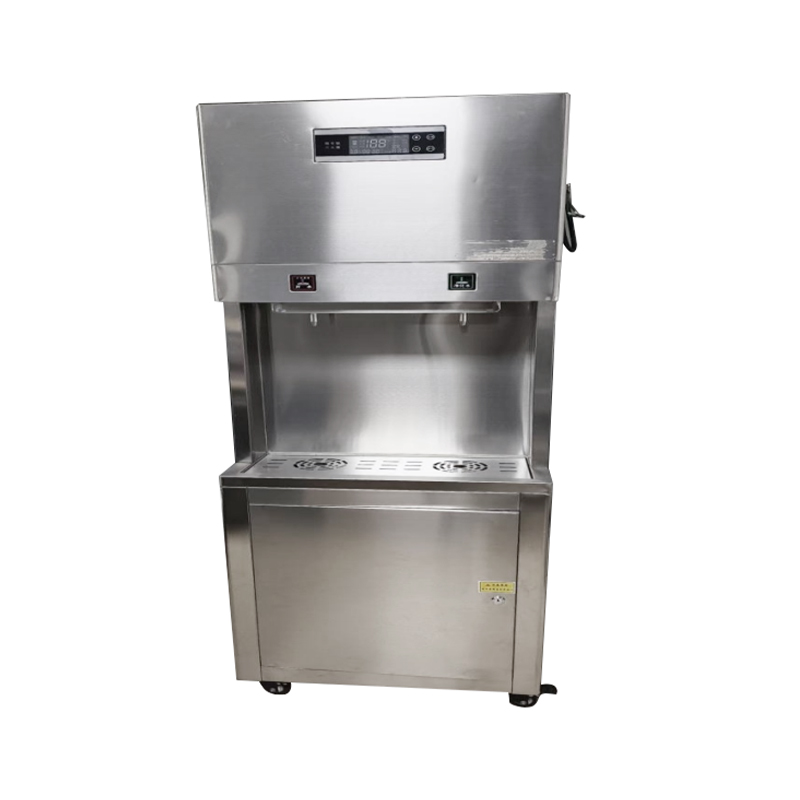
The multi-temperature water dispenser's function achieves precise, tiered water temperature control through the collaborative design of independent heating modules and heat exchange technology, meeting diverse needs for hot, warm, and chilled water in different scenarios. Its core logic lies in physically isolating the heating and cooling systems, preventing cross-temperature mixing through independent control modules, and improving energy efficiency through heat exchange technology, ultimately achieving stable output of multiple water temperatures.
Independent heating modules are the foundation for multi-temperature water dispensers. Commercial water dispensers typically employ multiple independent heating units, each equipped with an independent temperature control sensor and power regulator. For example, the hot water module uses a high-power stainless steel heating element to quickly heat water to boiling; the warm water module uses a low-power heating element and intelligent temperature control algorithm to maintain the water temperature within a comfortable range of 45℃ to 60℃. This design allows water flows with different temperature requirements to complete the heating process in independent channels, avoiding temperature fluctuations caused by repeated starting and stopping of a single heating module in traditional water dispensers. Furthermore, the independent heating modules support zoned maintenance; when one module fails, the others continue to operate normally, ensuring continuous heating capacity.
Heat exchange technology achieves efficient warm water production through energy recovery. In commercial water dispensers, the heat exchanger typically employs a nested double-pipe structure: the inner pipe carries cold water, while the outer pipe carries hot water. When hot water flows through the outer pipe, its heat is conducted through the metal wall to the cold water in the inner pipe, preheating it to 30°C to 40°C before it enters the warm water heating module for precise temperature control. This process not only reduces the energy consumption required for warm water heating but also avoids the risk of bacterial growth caused by directly mixing hot and cold water. For example, when a user needs 45°C warm water, the system first preheats the cold water to 35°C through heat exchange, then replenishes the remaining 10°C of heat through the warm water heating module, ultimately achieving precise water temperature control.
The accuracy of multi-temperature water output relies on the coordinated scheduling of an intelligent control system. The main control chip of the commercial water dispenser dynamically adjusts the power output of the heating element and the opening of the heat exchange valve by collecting water temperature data from each temperature module in real time. For example, when a user selects both hot and warm water, the system prioritizes the full-power operation of the hot water module while controlling the preheating temperature of the warm water module by adjusting the opening of the heat exchange valve. Furthermore, the intelligent control system has a learning function, allowing it to preset water temperature requirements for different time periods based on user habits. For instance, it automatically prioritizes hot water supply during morning peak hours and increases warm water supply during lunch breaks, thereby optimizing equipment operating efficiency.
The combination of independent heating modules and heat exchange technology significantly improves the energy efficiency of commercial water dispensers. Traditional water dispensers heat water to boiling before mixing it with cold water, a process that wastes a significant amount of heat. Dispensers using heat exchange technology recover the waste heat from hot water discharge, increasing cold water preheating efficiency by over 60%. Combined with the power-level control of the independent heating modules, overall energy consumption is reduced by 30% to 40% compared to traditional equipment. This energy efficiency optimization not only reduces operating costs but also meets the procurement requirements for energy-saving equipment in public places.
The commercial water dispenser's multi-temperature dispensing function is further enhanced by multiple safety protection mechanisms. An independent heating module is equipped with an overheat protection device; when the water temperature exceeds the set value, the system automatically cuts off the power and initiates a cooling process. The hot and cold water exchange area is made of food-grade stainless steel to prevent the release of metal ions that could affect water quality. Furthermore, the device features anti-dry-burning protection and leakage protection to ensure safe operation even under extreme conditions. These safety designs make the commercial water dispenser suitable for long-term use in high-traffic locations such as schools, hospitals, and office buildings.
From a user experience perspective, the multi-temperature dispensing function meets the personalized needs of different users. For example, in an office setting, employees can use hot water to make coffee, warm water to prepare formula, and ice water to make cold drinks; in a medical setting, nurses can use warm water to clean wounds, hot water to sterilize instruments, and ice water for cold compresses and pain relief. This multi-functional design not only saves space but also enhances ease of use through precise temperature control. Some high-end models also support preset water temperatures via a touch panel, allowing users to easily access frequently used temperatures with a single click, further simplifying the operation.
The multi-temperature dispensing function of commercial water dispensers achieves precise tiered water temperature control, significantly improved energy efficiency, and comprehensive safety assurance through the deep integration of independent heating modules and heat exchange technology. This technological architecture not only meets the diverse needs of public places for drinking water equipment but also reduces maintenance costs through modular design, providing modern commercial spaces with an efficient, reliable, and energy-saving drinking water solution.