


Can a purified water preparation device automatically adjust its water production capacity based on water consumption to meet the varying water demands of buildings or factories at different times?
Release Time : 2026-02-03
In the domestic water systems of buildings and factories, water demand is not constant—peak hours for morning washing, concentrated water use in canteens at lunchtime, and off-peak hours at night, resulting in significant fluctuations in water consumption at different times. Faced with this dynamic change, the ability of a purified water preparation device to intelligently respond and automatically adjust its water production capacity directly affects water supply stability, energy efficiency, and equipment lifespan. The answer is yes: modern high-quality purified water preparation systems have widely integrated intelligent frequency conversion and adaptive control technologies, enabling precise matching of the water production rate based on real-time water consumption, achieving "on-demand water supply and efficient operation."
1. Intelligent Sensing and Real-Time Feedback: The "Nerve Endings" of Water Demand
To achieve on-demand water production, it is essential to accurately sense changes at the water consumption end. Advanced purified water preparation devices are equipped with high-precision flow sensors and pressure transmitters at the water outlet or upstream of the storage tank to continuously monitor instantaneous flow rate and pipeline pressure. When concentrated water usage by building residents causes a drop in pressure or a sudden increase in flow, the system immediately identifies it as a "high-demand state"; conversely, during nighttime or holidays when water usage is low, it is determined to be a "low-load mode." This data is transmitted in real-time to the central controller, becoming the core basis for adjusting water production capacity. This closed-loop sensing mechanism is like equipping the system with "nerve endings," giving it a keen insight into external water usage changes.
2. Variable Frequency Drive and Pump Unit Synergy: A "Flexible Regulating Valve" for Water Production Capacity
Sensing is only the first step; the key lies in execution. Traditional fixed-frequency equipment operates at a fixed power once started, resulting in energy waste or insufficient water supply regardless of actual water usage. Modern systems generally use variable frequency pumps as the core power unit. The central controller dynamically adjusts the pump motor speed based on sensor signals: increasing the speed during peak hours to increase the inflow and production water flow; and reducing the speed during off-peak hours to maintain basic water supply or enter standby energy-saving mode. Some large factory systems even configure multiple pumps in parallel, achieving a wider range of water production regulation capabilities through start-stop combinations and variable frequency coordination. This "flexible output" not only matches water usage curves but also significantly reduces power consumption and extends the lifespan of membrane modules and pumps.
3. Modular Design and Buffer Storage: "Safety Redundancy" for Sudden Demands
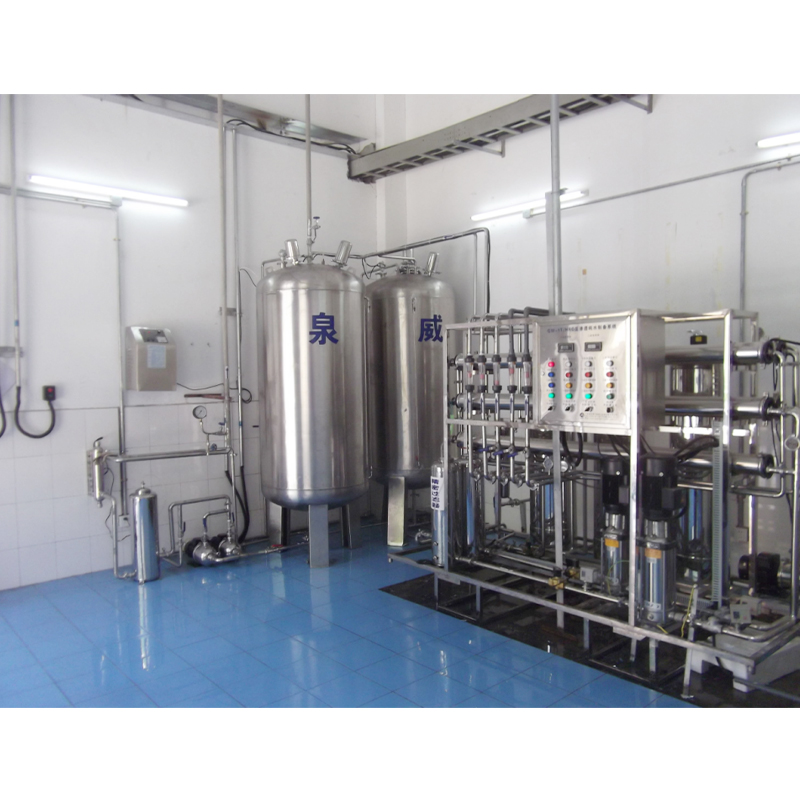
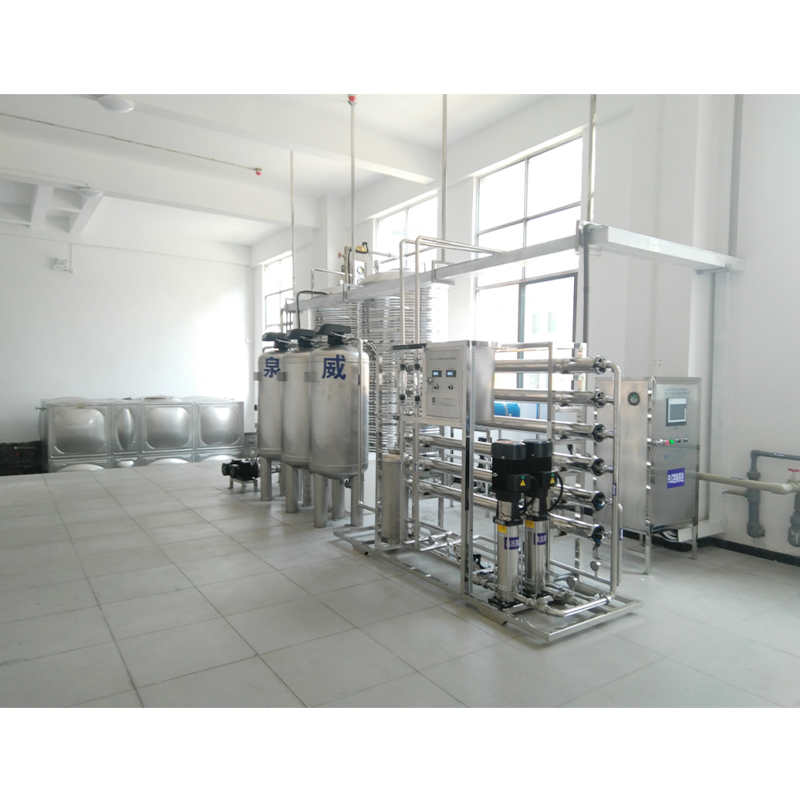
Even with intelligent adjustment capabilities, extreme instantaneous water usage may still exceed the immediate water production limit. Therefore, the system often combines modular water production units with buffer storage tanks. The storage tank pre-stores a certain amount of qualified purified water, which is released first during surges in water usage to alleviate instantaneous pressure on the water production unit. Simultaneously, multiple water production modules can operate independently in zones, intelligently starting and stopping some modules according to total demand, avoiding inefficient "small horse pulling a large cart" or "large horse pulling a small cart" situations. This coordinated "production-storage-use" strategy ensures continuous water supply and optimizes the overall energy efficiency ratio, making it particularly suitable for factory dormitories or high-rise office buildings with high personnel flow and significant water usage peaks and troughs.
In conclusion, the purified water preparation device is far more than a simple "water production machine"; it is an intelligent water treatment terminal integrating sensing, decision-making, and execution. Through the organic combination of sensor feedback, frequency conversion control and system redundancy, it truly achieves a dynamic balance of "more water consumption means more production, less water consumption means less consumption", providing a stable, efficient and energy-saving domestic water supply for buildings and factories.
1. Intelligent Sensing and Real-Time Feedback: The "Nerve Endings" of Water Demand
To achieve on-demand water production, it is essential to accurately sense changes at the water consumption end. Advanced purified water preparation devices are equipped with high-precision flow sensors and pressure transmitters at the water outlet or upstream of the storage tank to continuously monitor instantaneous flow rate and pipeline pressure. When concentrated water usage by building residents causes a drop in pressure or a sudden increase in flow, the system immediately identifies it as a "high-demand state"; conversely, during nighttime or holidays when water usage is low, it is determined to be a "low-load mode." This data is transmitted in real-time to the central controller, becoming the core basis for adjusting water production capacity. This closed-loop sensing mechanism is like equipping the system with "nerve endings," giving it a keen insight into external water usage changes.
2. Variable Frequency Drive and Pump Unit Synergy: A "Flexible Regulating Valve" for Water Production Capacity
Sensing is only the first step; the key lies in execution. Traditional fixed-frequency equipment operates at a fixed power once started, resulting in energy waste or insufficient water supply regardless of actual water usage. Modern systems generally use variable frequency pumps as the core power unit. The central controller dynamically adjusts the pump motor speed based on sensor signals: increasing the speed during peak hours to increase the inflow and production water flow; and reducing the speed during off-peak hours to maintain basic water supply or enter standby energy-saving mode. Some large factory systems even configure multiple pumps in parallel, achieving a wider range of water production regulation capabilities through start-stop combinations and variable frequency coordination. This "flexible output" not only matches water usage curves but also significantly reduces power consumption and extends the lifespan of membrane modules and pumps.
3. Modular Design and Buffer Storage: "Safety Redundancy" for Sudden Demands
Even with intelligent adjustment capabilities, extreme instantaneous water usage may still exceed the immediate water production limit. Therefore, the system often combines modular water production units with buffer storage tanks. The storage tank pre-stores a certain amount of qualified purified water, which is released first during surges in water usage to alleviate instantaneous pressure on the water production unit. Simultaneously, multiple water production modules can operate independently in zones, intelligently starting and stopping some modules according to total demand, avoiding inefficient "small horse pulling a large cart" or "large horse pulling a small cart" situations. This coordinated "production-storage-use" strategy ensures continuous water supply and optimizes the overall energy efficiency ratio, making it particularly suitable for factory dormitories or high-rise office buildings with high personnel flow and significant water usage peaks and troughs.
In conclusion, the purified water preparation device is far more than a simple "water production machine"; it is an intelligent water treatment terminal integrating sensing, decision-making, and execution. Through the organic combination of sensor feedback, frequency conversion control and system redundancy, it truly achieves a dynamic balance of "more water consumption means more production, less water consumption means less consumption", providing a stable, efficient and energy-saving domestic water supply for buildings and factories.